What is an automated chemistry analyser?

What is an automated chemistry analyser?

The idea of this article was conceived when hearing a quote from a management course, that was misattributed to Peter Drucker. The original phrase belongs to Lord Kelvin, a world-famous scientist who developed the absolute temperature scale. The original quote says:

“What is not defined cannot be measured. What is not measured, cannot be improved. What is not improved, is always degraded.”

The article focuses on the last two phrases. The first sentence means that to improve our product it is necessary to measure some of its properties. In this way, it will be possible to know if there is any failure during the production process. The last sentence means that if we can’t control the process, our product will more likely degrade over time and we won’t be able to detect it because of the lack of proper quality parameters.

When measuring is a must do

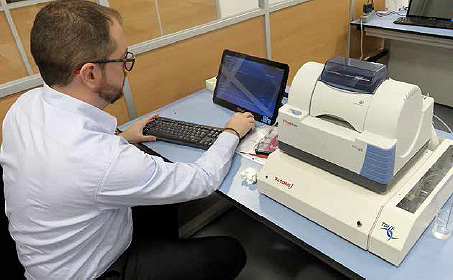
The quote from Lord Kelvin highlights the importance of getting the most reliable data on the qualitative and quantitative composition of our wine. For those who don’t have their own analytical tools, there is always the option to send samples to public or private laboratories dedicated to wine analysis. However, the best alternative, considering time and cost of external analysis, is to have an in-house laboratory. Some time ago, it was usual to see UV-Vis spectrophotometer in most of the winery labs. With these instruments, the winemaking process is manually monitored using different chemical and enzymatic reactions in order to obtain the key parameters. However, the scientific and technical advancement in the last decades make more affordable to the wineries the acquisition of the new automated chemistry analysers.
An automated chemistry analyser is the result of the technological development in various science fields: electronics, robotics, optics, materials, all of them combined to bring a fast, accurate, reliable and secure solution to the analytical needs of a winery. Despite its high-tech components, an analyser is really very user-friendly.
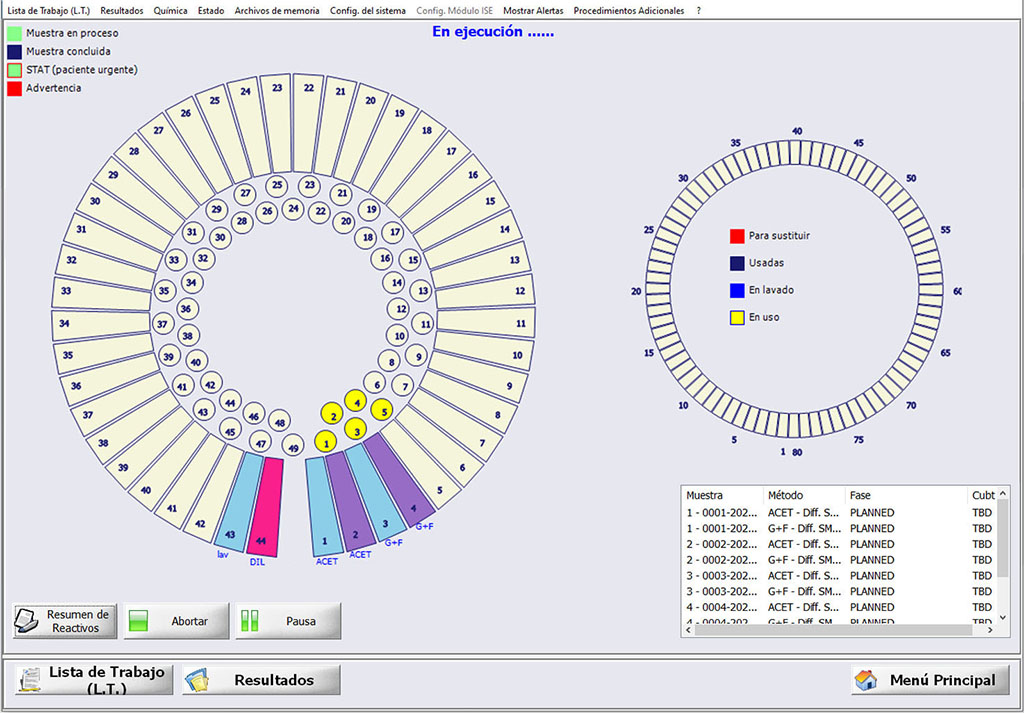
Basically, it consists of three parts: the robotics for the dispensing of samples and reagents, the optics conceived to monitor the reaction and the software that controls all the processes running in the machine and has the user interface.

The “mechanical” hand that rocks the cradle

Every automated analyser has one or more robotic arms whit its corresponding needle that are in charge of systematically repeating the following actions: aspirate the proper volumes of sample and reagents, dispense the liquids inside the optical cuvette and properly homogenise the sample and reagents mixture.
The aspirated volume is defined by the diluter, which in the case of the Miura range of instruments, consists of a ceramic pump that allows the dispensing of volumes in the range of 2-450 uL, with a high degree of accuracy and repeatability. The high quality of the materials used to make the diluter allows the analyser to work in a continuous manner during long times, without lack of precision nor mechanical failures.
The needle of the robotic arm is subjected to automatic cleaning between sample and sample and between sample and reagents, in order to avoid the cross-contamination by carry-over.
Once the sample and reagents are in the cuvette, the same arm homogenise the mixture through several operations of aspiration and discharge, specifically designed to avoid the formation of bubbles which may interfere with the absorbance reading.
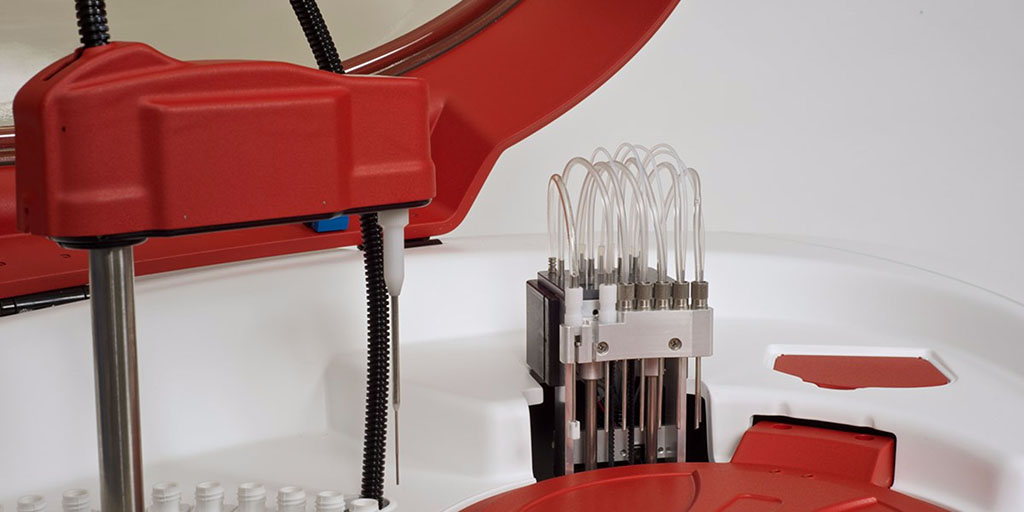
The all-seeing eyes

The all-seeing “eyes”

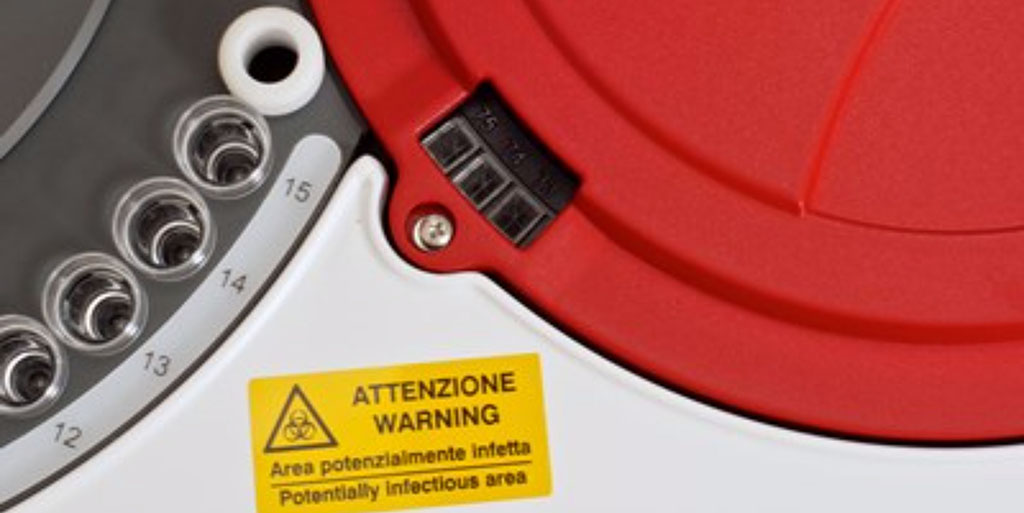
Once the mixture is homogenised, the reaction has to take place at an optimum temperature, in order to accelerate the enzyme activity and reduce the waiting time. Usually, the reaction cuvettes are kept at a constant temperature of 37 °C. This control is achieved thanks to an air heating system, that replaces the old and unsafe water heating systems. In this way, the Miura range of analysers can effectively set the reaction temperature at 37.0 ± 0.1 °C.
A belt drive motor operated by the microprocessor rotates the cuvettes allowing them to move in a pre-established order from the dispensing point to the reading point, once the reaction time is over. At the reading point, the optical system basically consists of a lamp, a filter wheel, the reaction cuvette and the photodetector.
The halogen lamp emits light in a wide region of the UV-Vis spectra, whit an estimated life of 2000 hours. A series of filters conveniently selected in the range of 340-700 nm are responsible of producing an almost monochromatic beam of light. This range of the spectra covers almost all of the most important analytical parameters in oenology. The bandwidth of each filter must be low enough (usually, less than 5 nm) to correctly apply the governing laws of the interaction of light with matter.
Once the monochromatic beam of light passes through the cuvette, some photons are absorbed by the reacting mixture of sample and reagents. Then, when the beam of light reaches the detector, the output intensity is measured and compared whit the intensity of light when there is transparency in the cuvette (i.e., cuvette blank). To determine the unknown analyte concentration, a theoretical factor is employed or a calibration curve is previously performed using standards with a known concentration of the analyte. Whatever the method used, the software itself calculates the concentration of the analyte of interest
directly from the readings at the detector. To determine the unknown analyte concentration, a theoretical factor is employed or a calibration curve is previously performed using standards with a known concentration of the analyte. Whatever the method used, the software itself calculates the concentration of the analyte of interest directly from the readings at the detector.
When the reaction is finished and the absorbance is measured, the cuvettes are discarded for the next analysis (if disposables) or go through a cleaning cycle (if reusables). The cleaning cycle is developed at the washing station point. The washing station consists of a series of needles and pumps that absorb the mixture of sample and reagents from the cuvette, wash the cuvettes and then dry them, leaving them ready to use for the following analysis. The cuvette washing is executed in a simultaneous way with the reagent dispensing and the reading, in such a way there is always an available cuvette to continue with the schedule worklist.
One detail to keep in mind: while the heating system ensures the optimum temperature for the cuvettes, the reagents have to be refrigerated in order to extend his lifetime and on-board stability. This difference in temperature is resolved technically by a pre-heating system installed in the robotic arm to increase the temperature of the sample and reagents before they are dispensed inside the reaction cuvette.
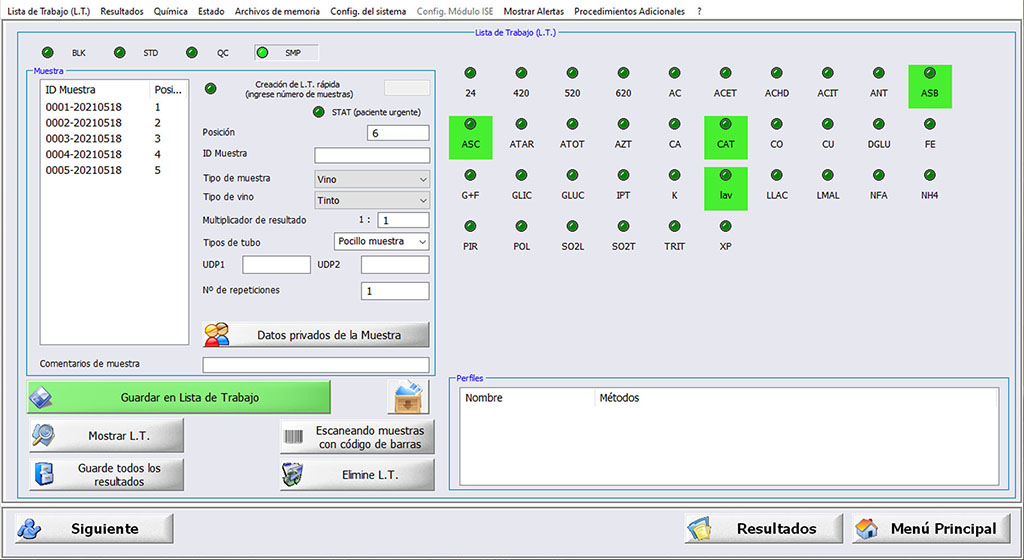
The analyser's brain

The analyser’s “brain”

The operation of the analyser is completed with an integrated software that commands all the movements of the machine. Furthermore, through an easy-to-use interface the analyst can perform many routine tasks such as: sample and reagents positioning, calibrations of the different parameters, quality controls, statistics analysis, running of one or more tests for one or more samples, defining a worklist, visualize current results, search archived results, generate and print reports.
This interface and the automatization of the whole process of dispensing sample and reagents allows the operator to be free to perform other tasks and activities inside the lab and the winery. Therefore, the time of the staff is optimised and the management of the daily activities is improved.
Besides all the positive points we resumed till here, there is one more advantage of an automated analyser. The reagent consumption per test is lower than in a manual spectrophotometer, therefore there is an enormous amount of money saved. Not less important is the fact that an automated analyser increases the staff safety reducing the manipulation of some potentially harmful reagents.

The importance of choosing the right analyser
Picture 1 Picture 2When the analyser operation is known, the winemaker has to choose the proper type of analyser depending on the number of samples to be tested and the number of parameters to be determined.
Recently, the arrival of new analysers promising to have more features and efficiency, has drawn attention. However, careful must be taken. Although the working principle of an analyser is quite simple as previously shown, not all the analysers have the same performance. First of all, reliability and accuracy of each analyser will depend heavily on the quality of the materials used for the construction of the key pieces (ceramic pump, arm needle, cuvettes, lamp, filters, detector). In second place, not all the analysers perform well when it is working with such complex matrices as wine is. For instance, homogenisation systems and reaction times are very different when comparing oenology analysers with biomedical analysers. A direct application of any automated chemistry analyser to oenology is not straightforward. So, the final user must rely only on those analysers already tested and validated in oenology, because they are the only ones that could give accurate and precise results. At TDI, we were pioneers in the research and development of analysers and reagents for the analytical oenology. More than 30 years of experience give us the technical know-how, that certifies us as the most convenient supplier of analytical solutions in oenology.
Our range of Miura analysers gives accurate, precise and reliable results for the most important parameters for a great diversity of wine and must samples. Furthermore, all the Miura analysers can work correctly for many years with the proper maintenance. This maintenance could be performed periodically by the own operator, and occasionally by a qualified technician.

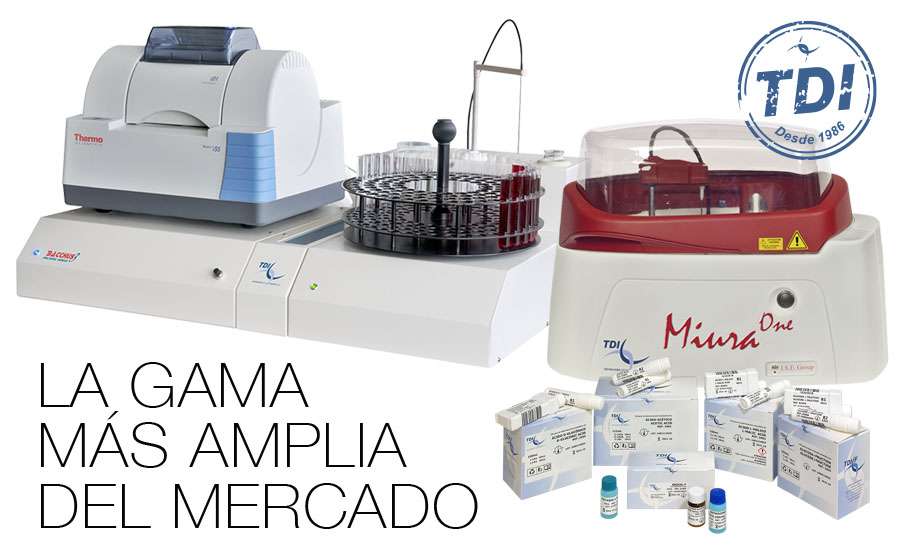
TDI is the only company that could offer the most complete range of automated analysers, thanks to its exclusive Miura family:
– Miura Micro: the smallest one, conceived and designed for wineries with low analytical needs;
– Miura One: a small bench-top analyser, as reliable as the biggest;
– Miura 200: high throughput, great analytical performance;
– Miura 200 2 Arms: the new member, designed for laboratories and wineries with the highest analytical needs.

Our philosophy will always be to provide the best advice to our costumer in an honest, professional and personalized way according to his real needs. Because we are TDI, we are ENOLUTION.

MIURA 200

Low analytical cost and high precision.

Photo of Miura 200 from TDI

MIURA MICRO

A complete revolution in the automation of analytical control in Oenology.

MIURA ONE

Small but with all the benefits of the largest.

Photo of Miura One from TDI

Haven’t you got to know our MIURA Micro analyser yet?

Haven’t you got to know our MIURA Micro analyser yet?

Haven’t you heard of the new MIURA Micro analyser yet?

New MIURA Micro from TDI

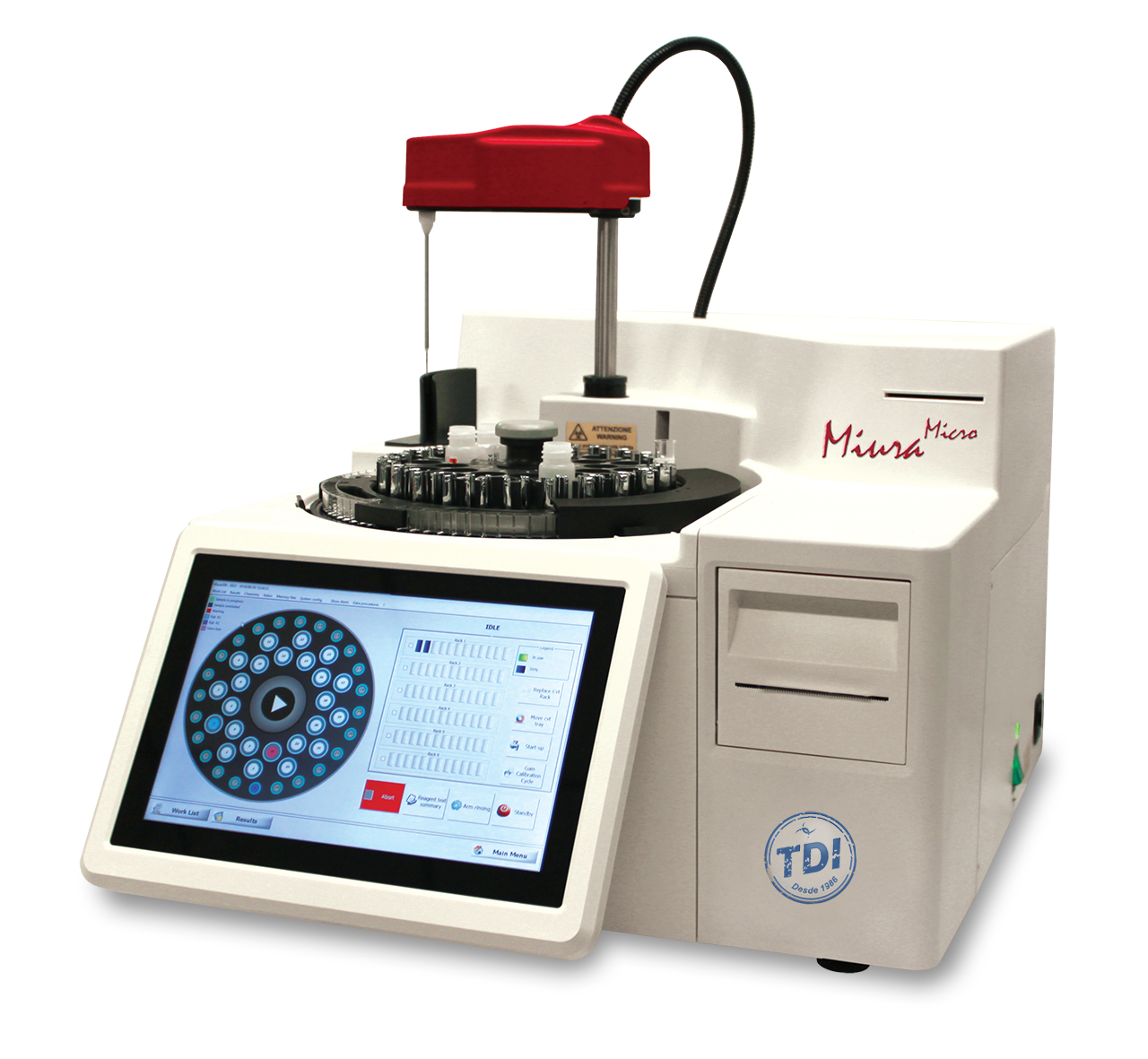
It’s the complete revolution in the automation of analytical control in oenology. It perfectly matches the concept of quality and profitability. It combines the precision necessary for essential analysis of oenology with a compact size and an affordable price for all types of wineries, even the smallest ones.

Thought and designed to be an equipment of automatic operation without supervision, it allows the winemaker to focus on their daily activities, while the equipment performs all the necessary analysis with almost no need for sample preparation and without the need to pipet reagents. Therefore, it provides security to the analyst and convenience and suitability to the winemaker.

Its 24 positions for samples and 24 positions for reagents allow to determine the multiple parameters that are required in oenology. In addition, this equipment has been designed to be practically maintenance-free, thanks to its 72 disposable cuvettes.

The high precision of its dilutor and the possibility of working with volumes of the order of hundreds of microliters, allow saving up to 10 times the volume of reagent consumed in a traditional spectrophotometer.
Each unit is delivered with all the analytical parameters already programmed, allowing the use of TDI’s own range of reagents, all of them with certified stability and the best performance on the market.

All this allows us to affirm that the Miura Micro is, by far, the automatic and multiparametric analyser with the best value for money on the market.

If you still do not know it and are interested in a demonstration, you can contact us through our social networks or by email at info@t-d-i.es.

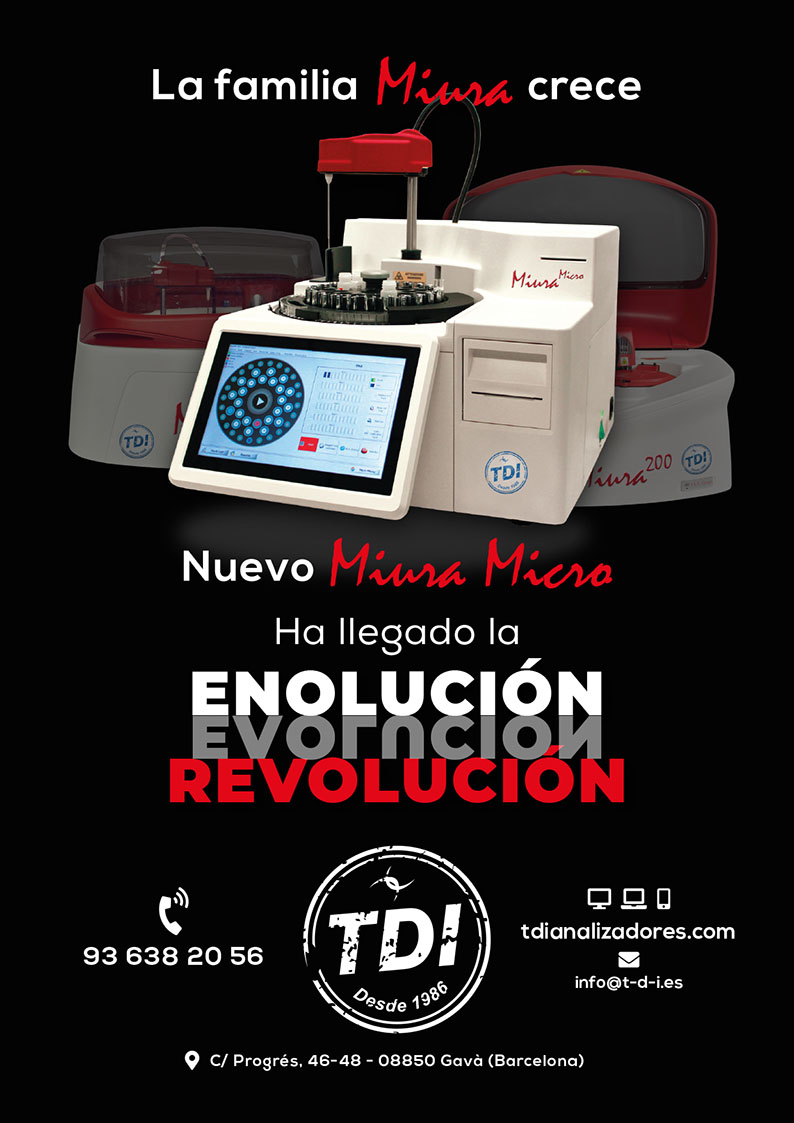
Advertising of TDI's new MIURA Micro

TDI’s new MIURA Micro press advertising

Cellers Unió trusts TDI

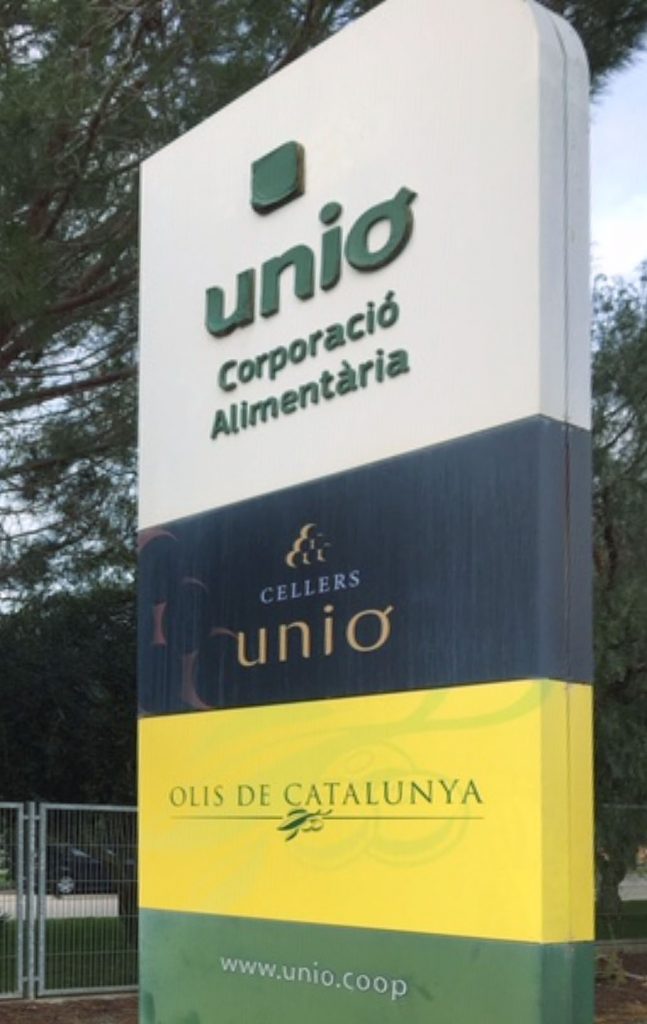
CELLERS UNIÓ relies on TDI for the acquisition of a MIURA 200 high-performance chemical analyser.

Cellers UnióCELLERS UNIÓ aware of the importance of continuing to evolve technologically without losing sight of environmental problems, it is equipped with the new high-performance analyser MIURA 200 from TDI to improve the optimization of results, reduce analytical costs and also reduce the waste generated. With this acquisition, they will be able to invest more time in developing a more competitive and innovative product in order to reach a larger number of consumers.
After 18 years of working with the LISA 200 analyser, they trust a product again TDI.

Once again, TDI provides added value in service and advice based on meeting the needs of our customers.

WE ARE ENOLUTION, THE ORIGINALS.

Technical training sessions in Valdepeñas and Campo de Criptana

Technical training sessions in Valdepeñas and Campo de Criptana

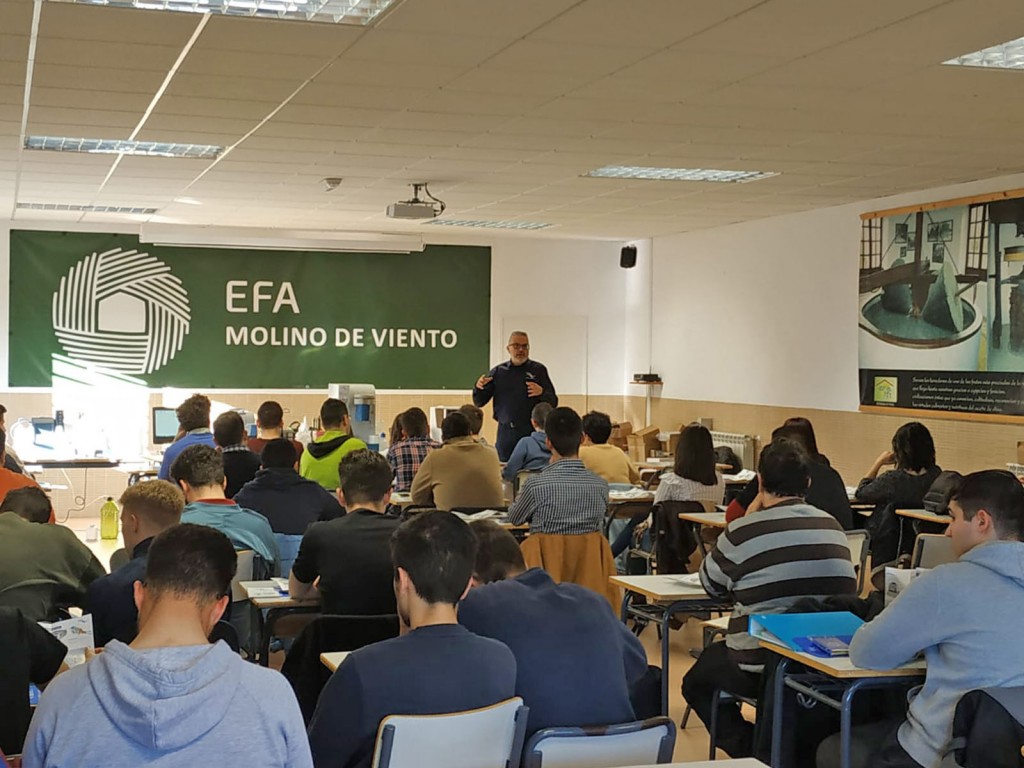
Tecnología Difusión Ibérica has collaborated, on February 18 and 19, in the Technical Training Days that have taken place at the IES Gregorio Prieto in Valdepeñas and at the EFA Molino de Viento in Campo de Criptana.

In its more pedagogical aspect and always wanting to train good specialists in oenology, TDI has entered into agreements with these centers. These sessions are aimed at current students, former students, as well as wineries in the area that may be interested in attending.

The act began with an explanation of the history of the company, closely linked to the evolution of analytical techniques that have allowed the development of the sector to this day. The company’s full range of products was reviewed, ranging from FTIR analyzers to small titrators, explaining advantages, disadvantages, uses, etc.
photo-exhibition-valde alone-campo-criptana
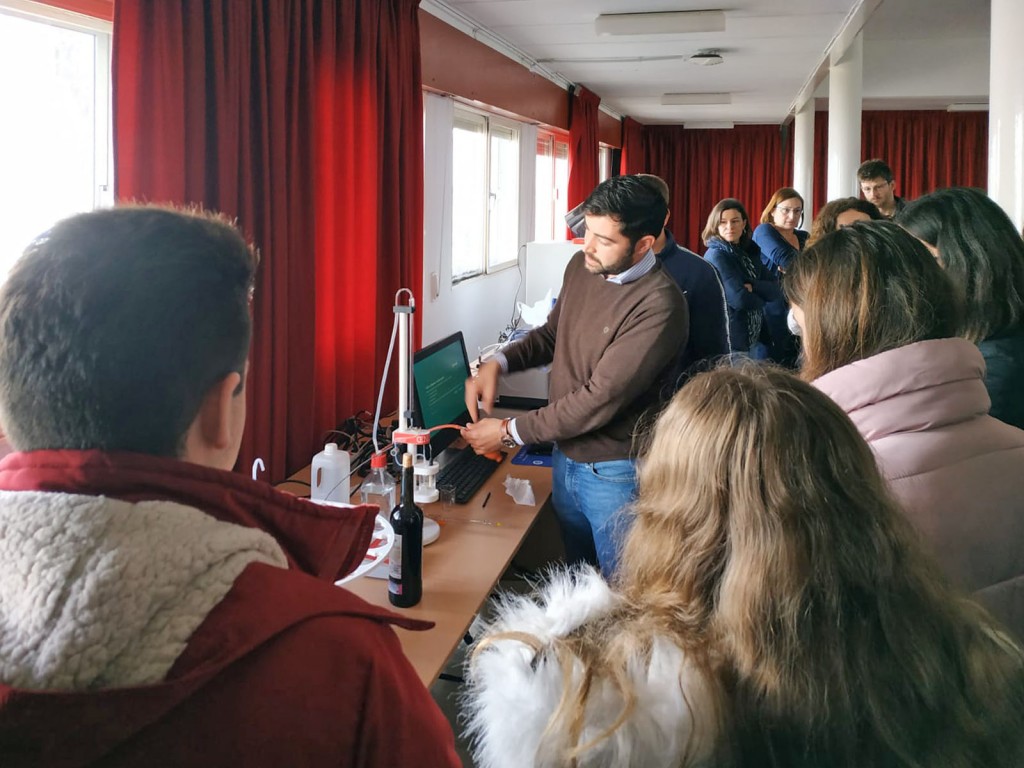
Later the students were able to carry out practices with the teams, thus solving doubts and concerns.

Wineries in the area were given the opportunity to come with their samples to be able to analyze them and check “in situ” the operation of the machines.

From the company we want to thank both centers for the excellent organization and highlight the great welcome and interest on the part of all those attending the two Training Sessions. Participation has been a success and we believe that it is essential not to lose contact with educational centers and professionals in the sector in order to have an exchange of enriching technical experiences in both directions.

photo-talk-valdepenas-campo-criptana

The only specialized in oenology

The only specialized in oenology

We are the originals, not the copy

TDI Enolution

Tecnología Difusión Ibérica, s.l. company specialized in oenological analysers and reagents since 1986 has focused its activity during these three decades on consolidating the national and international market with an extensive range of analysers, both infrared and chemical, becoming a benchmark for quality and professionalism in oenological analysis techniques.
TDI is the only company in the world dedicated exclusively to making oenological material. It has the wide range of products on the market, where its chemical analysers stand out MIURA and infrared analysers BACCHUS 3.
Tey have other analysers such as CRIOSMART (tartaric stability control), the ENO 20 (used to SO2L y SO2T detection), the ATP 3000 (detection of pH and AT at high rates), the FLASH (analysis of pH, total acidity and SO2), the ALCOQUICK(NIR for alcohol and density), the SMART (ultra compact, accurate and fast automatic chemical analyser), the densimeter ALM155 (density and alcohol degree measurement according to the official O.I.V.), and the DE2000 (Steam distiller to standards O.I.V. for alcohol and volatile acidity).

It is worth highlighting its rapid filtration system at the reception of harvests. MOSTONET®, essential element for the IRTF in analysis of musts.

To all these analyzers must be added their wide range of reagents and standards for direct use.

the-widest-range-on-the-market

A whole team at your disposal

The balanced variety of their catalog is enough to satisfy most of the usual needs in oenology, which allows them to advise clients objectively, finding the best solution to their analytical problems. They are specialists in solutions for the reception of harvests. In addition, they offer payment facilities and adapted financing, as well as machine rental options.

the-widest-range-on-the-market

REAGENTS AND CONSUMABLES

Supply of reagents and consumables in 24 hours throughout the year (in Spain).

TECHNICAL SERVICE

Our company has a team of technicians specialized in Oenology offering on-call service on weekends during the campaign (in Spain).

OWN R&D&i DEPARTMENT

TDI researches, develops and innovates to always be at the forefront of oenological analysers.
We offer free parameter update.

Technical Conference “Quality Control in Harvest Reception”

Technical Conference "Quality Control in Harvest Reception"

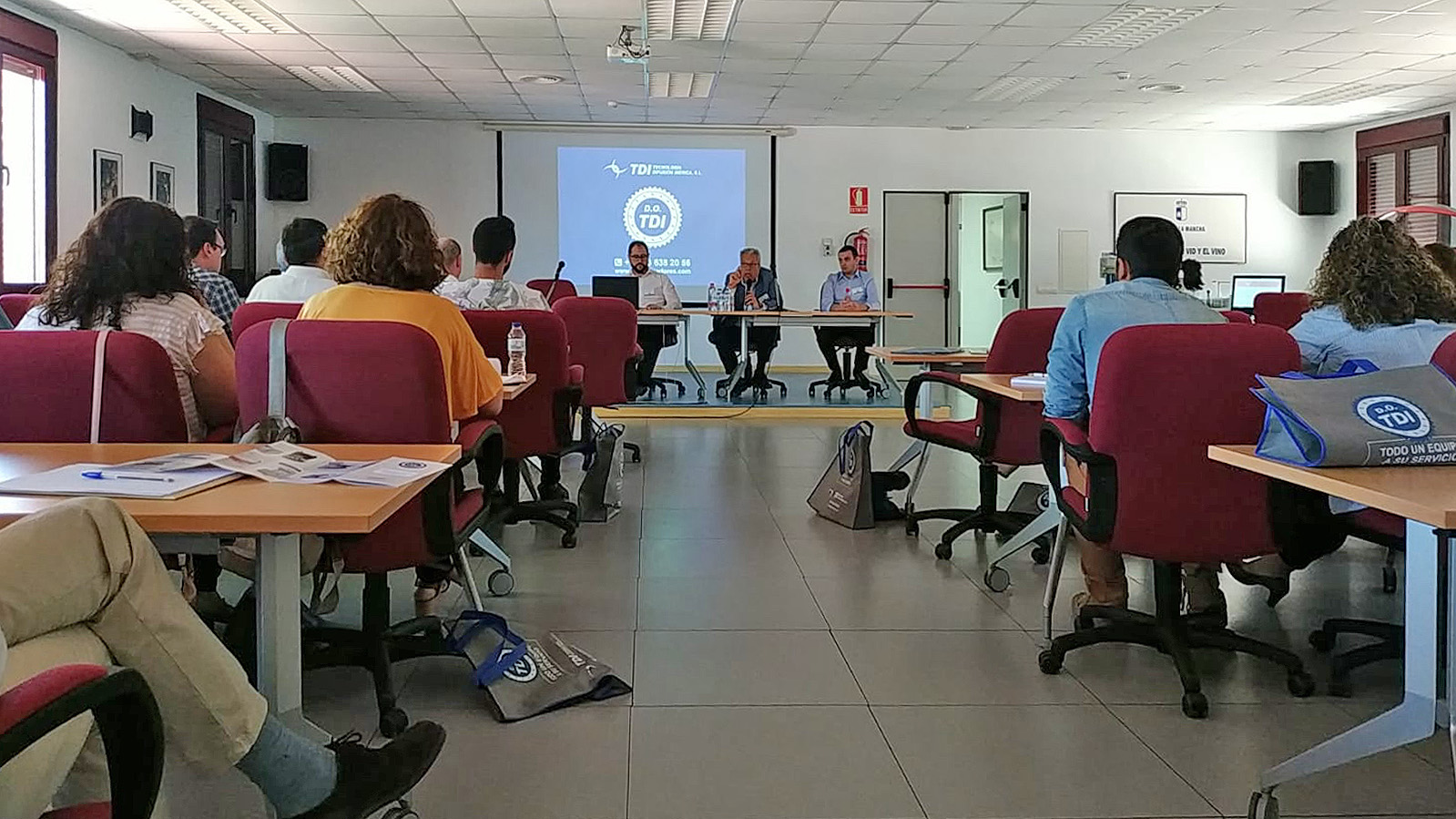
More than fifty oenology professionals gathered at the facilities of the IRIAF (before IVICAM) in Tomelloso (Ciudad Real), giving the propitious framework for the successful realization of a Technical Conference organized by the Colegio Oficial de Enología de Castilla-La Mancha and with the collaboration of Instituto Regional de Investigación y Desarrollo Agroalimentario y Forestal (IRIAF) and tehe company Tecnología Difusión Ibérica (TDI).

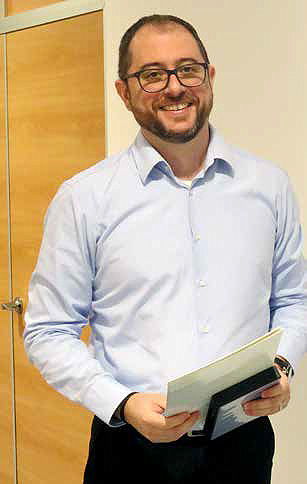
The conference began with the intervention of the dean of the College, Miguel Ruescas Lozano, taking stock of the current situation in the region and marking the challenges and opportunities that arise and the importance of being prepared for them. He also placed special emphasis on the trajectory and experience of TDI and, in particular, his manager Jorge Subirana, who has been dedicated to the world of analytics applied to oenology for more than 30 years.
h=”940″ height=”705″ />

Then, Dr. Mario Weibel, Responsible of I+D+i at TDI, referred to the different analysis techniques that can be applied to control reception during harvests. In controlling technological maturity, the existing instrumental possibilities with their respective ranges and details were detailed. Thus, refractometers (to measure sugars and probable degree), potentiometric titrators (for pH and total acidity), automatic reception stations (for sugars, pH and total acidity), automatic chemical analysers (for enzymatic determination) were reviewed. of malic and acetic acid, colorimetric of tartaric acid, pH and total acidity and turbidimetric of potassium) and the FTIR type analysers (for the simultaneous determination of all the necessary parameters in reception). Regarding the health status of the grape, the need to use reliable, precise and verifiable parameters was emphasized. The advance in the determination of botrytis was introduced from the first Lacasa analyzers to the current methods of gluconic acid determination by means of automatic enzymatic chemical analyzers, FTIRs and biosensors, comparing the speed and precision of each method. Finally, the existing methods to determine phenolic maturity were discussed and the limitations in the analysis of musts that have not macerated long enough were analyzed.
Technical conference taught by TDI at Tomelloso
On the second shift, Eng. Blas Martínez, Technical Director of TDI, spoke about the criteria that must be taken into account when choosing the solution that best suits the needs of each winery. Taking into account all the variety of equipment available on the market and the lack of clarity in its real application, relationships were established between the real needs of any reception with the best applicable solution according to the resources, requirements and way of working of each winery or cooperative. Also, it was specified what can be expected from each of the equipment, in what ranges it can be measured and its real limitations, also differentiating between costs and analysis times. Finally, the real capabilities of the techniques when using high-quality products were clarified, giving as an example the record times that can be reached using a good reagent and the accuracy with which gluconic acid can be measured in the must with equipment of type FTIR.

Finally, a live demonstration of the solutions that TDI offers for control at reception, from its exclusive filtration system Mostonet®, through the most complete range of automatic chemical analyzers (enzymatic, colorimetric and turbidimetric) Miura and the FTIR line of analyzers Bacchus. The occasion was also used to present in society the Smart, the fastest chemical analyser on the market for reception analysis.
SMART analyser

Interview to Jorge Moreno at Enomaq

Interview to Jorge Moreno at Enomaq

How do you see the wine sector in Spain and abroad?

What are the trends towards which the sector is heading?

These and other interesting questions are analyzed by our commercial technician Jorge Moreno.

Our commercial technician for northern Spain Jorge Moreno, has been interviewed by Enomaq TV.

To see the interview, you can select the following link (available in Spanish):

Tecnología Difusión Ibérica, at the top of the future of oenological analysis

Tecnología Difusión Ibérica, at the top of the future of oenological analysis

Blas Martínez, technical director and head of Export of TDI“OUR OBJECTIVE IS THE DEVELOPMENT OF EQUIPMENT THAT DEMOCRATICES OENOLOGY AND ADAPTS TO THE NEEDS AND QUALITY OF EACH LABORATORY OR WINE CELLAR”

If there is a sector with specific and very specific needs in the wine industry, it is that of oenological analysis. And, before that, what could be better than discovering its intricacies at the hands of the first enological analytical company that existed in Spain? Tecnología Difusión Ibérica (TDI) opens the doors of his home to show us in depth and all the widest range of products that exists: theirs.

iSnce its beginnings, TDI has been a pioneer in the Spanish market for winemaking analytics, a market in which in 1986, the year in which Jordi Subirana founded the company, everything was still to be done: “From TDI, we offer and support oenology. Above all, the most chemical branch through the automation of equipment, both in the laboratory and in the cellar”, tells us Blas Martínez, technical management and responsible for Export of TDI.

The company is the creator of the technique of chemical analyzers, who better knows it and who better dominates it. Since its founding it has not stopped providing oenological innovations: in 1994, the sequential chemical analyzers (enzymatic and colorimetric); in 2002, the medium infrared analyzers (IRTF) after having collaborated in its development and tuning in France since 1997; and in 2006, TDI industrialized a rapid filtration system for must in the reception of vintages, the Mostonet.

“The wine market requires very specific products and that is what we offer”, clarifies Martínez. Being a family company, TDI offers that much-needed flexibility in a market such as wine, without ever forgetting the quality, rigor and means of a large company.

And despite being and maintaining the character of a family business, TDI has business facilities since 2016 that have nothing to envy a multinational. That same year the company doubled the size of its previous headquarters with the intention of offering the best possible service to all its customers.

The most complete range of the market

If something makes TDI special is its adaptability, it offers the widest range of products that can range from the most sophisticated analyzer to a simple titrator. In addition, it is the only company able to offer chemical analyzers at the same time (enzymatic and colorimetric), specific reagents for oenology, titrators and analyzers by IRTF. Only they can say that they are the only company in the world dedicated exclusively to making oenological material.

Blas Martínez, technical director and head of Export of TDI“If we delve into our products, to start we must talk about the range of IRTF equipment, infrared for physical measurement, (Bacchus 1, Bacchus 2, Bacchus 3 and Bacchus 3 MultiSpec)”, says the technical director and responsible for Exportation of TDI. All of them are destined especially for the analysis in controls of maturation, reception in vintages, musts and musts in fermentation, finished wines and natural sweet wines. “In this line, the NIR equipment for the measurement of alcohol, its density and dry extract (AlcoQuick 4000) is based on a method of measurement by spectroscopy, which allows a direct measurement of ethanol in wines, using wavelengths chosen especially in the near infrared (NIR)”.
Another large group of equipment are the automatic chemical analyzers, with the Miura range as the protagonist (Miura One for small wineries and Miura 200 for high performance), which replace the pioneer LISA 200 and the semiautomatic analyzer Jolly 102 Color. Both the Miura and the Jolly perform chemical analyzes of enzymatic, colorimetric and turbidimetric type for all types of wines and musts. “These equipment require supplementary material, reagents and patterns, which have as a final result a more complete product. According to the needs of each client, we advise which are the equipment and the accessories that best adapt”, highlights us Blas Martínez.

“On the other hand, we have a range of titrators. In it we offer a model (ATP 3000) for large laboratories that calculates pH and total acidity at high speed, another more generic model (FLASH) that can be adapted to small and medium sized cellars for the analysis of pH, total acidity and sulfur free and total and the Eno20 titrator, in its two manual and automatic versions that allows the analysis of sulphides. Our range is completed with more specific and specific analyzers such as the CrioSmart for tartaric stability, the DE2000 for the extraction of alcohol and volatile acidity and the MostoNet filter.”

In this line of things, it is always worth remembering that TDI has the most complete range of oenological reagents on the market “covering both the enzymatic and the colorimetric part”, Blas Martínez specifies. Initially TDI manufactured in France and Italy the whole range of reagents, but since 2010 it was decided to move the production to the central company in Spain: “The reagents are very sensitive material, so we repatriated all the manufacturing to be more efficient and faster, taking full control of the production and thus avoiding errors. Since then we have greater ability to react to problems because it is essential for us to always be at the side of our customers and help them with any surprise”.

The Quality Policy, essential


Blas Martínez, technical director and head of Export of TDI“Our Quality Policy is based on efficiency in the service and speed”, proudly affirms the technical director of the company. The management of Tecnología Difusión Ibérica is committed to establish, implement and keep updated a Quality Policy through the Quality System defined according to the Reference Standard ISO 9001:2015. In this sense, the activities that TDI undertakes to carry out effectively are the commercialization of analyzers for oenology, the manufacture and commercialization of reagents and the technical assistance service.

“From TDI we advise the client from the first contact. We know your needs and we offer what you really need. Sometimes we find ourselves with demands that do not correspond to real needs. Our function is to listen, understand what you are looking for and what the client needs to measure and, in the end, offer you the best solution and the one that best suits your work”, explains Martínez.

To advise the most appropriate instrument for each need and to perform its proper maintenance, TDI’s customer service operates in the field, almost 24 hours a day, 7 days a week: “Our policy of action is always the same, if we can solve the problem by telephone and as soon as possible, we do it. The customer never speaks with a switchboard, he speaks directly with a technician who advises him on how to solve the problem remotely or through our remote system. If the technical intervention of the technician is required, this is the next step”.

TDI has five technical assistance points, one in Madrid, another in Barcelona, another in Logroño, one more in Ciudad Real and a fifth in Paris. The stock of spare parts is large enough so that most repairs can be made in less than 48 hours: “We are very proud to be able to say that in 98% of the cases in which technicians go to solve a problem, we repair it at once. We have stock for 80% of the parts to be repaired of our equipment. The remaining 20% are pieces that rarely break down because they are mechanical components of the device own structure”.

Arriving, repairing and allowing the client to continue working, that’s the goal: “Being able to achieve this in a sector like the wine industry is paramount since the economic loss that can occur when having the machines stopped one only day in time of vintage is enormous”, points out the technical director.

Research and development, the key

Another of TDI’s great strengths is its commitment to research. “We always investigate, the R & D department is essential and thanks to it we have made great advances and we have launched very powerful innovations. In 2017 he joined the company’s research team Mario Weibel, doctorated in chemical engineering and long-distance researcher, who works intensely in the improvement of the reagents that we already have and in which in the future we will have, as well as in the development of other fields and new products. In addition, at TDI we specialize in adapting equipment from other sectors, especially in the clinical field. We study them, adapt them to the oenological sector and ask their manufacturer to make the necessary modifications. In this sense, we are working on the development of software to be able to make applications that until now could not be done. To give an example, we are currently working on the LED technique applied to our Bacchus analyzers”.

The needs of the oenologist, always present

The oenological analytic is a relatively new subject in the sector, but sufficiently extended so that any oenologist does not have certain equipment. “To fully analyze the entire portion of the acids and sugars in wine and must an oenologist must have, as basic instruments, a small titrator and a photometer. The Eno20 titrator has always opened many doors for us in small cellars since with a single unit we can analyze the free sulfur dioxide and the total sulphurous, completely eliminating the problem of the appreciation of the turn and of the phenolic interferences”.

Although many small wine cellars look for manual systems, in many cases TDI advises them with automatic equipment since the speed and efficiency is much higher: “These smallwine cellars sometimes have more than 200 barrels to control and analyze them one by one is an unnecessary waste of time, in addition to the economic savings in reactive that supposes an automatic or semiautomatic system. A single kit, in the smallest of our Miura analyzers, can perform up to 400 analyzes. If it is done by spectrum, this same kit only reaches up to 25 analyzes”.

But in this context, what role does the price play in the Spanish market? “It is a very important factor. It is a competitive market but prices must justify everything that is behind a team: research, workers, quality, manufacturing… A price too low can trigger a dangerous game where the necessary margins are eliminated so that the companies work. Therefore, it would be necessary to change the chip and understand what is behind wine services and equipment”.

Oenological analysis and food safety

Food security does not refer only to the availability of food, but also includes the access of people to them and the biological use of them. Therefore, this security is also essential in the wine sector: “Knowledge is power. The functions of analysis and control of what happens in wine respond to the needs of food security. That a wine is piqued, that the machines used are the correct ones so that no components are mixed, that the bottles do not appear inconvenient, that the second fermentation does not entail health problems…

The Miura 200 high-performance chemical analyzer is one of TDI’s crown jewels. The company continues to research to optimize its qualities.


Having control over the entire production process is achieved through analysis systems and TDI offers all the tools to guarantee this control”.

Spain, at the same level as the rest of the world?

Spain is one of the countries with the greatest wine tradition, besides being one of the largest producers in the world, but does this translate into a privileged oenological position? “The level of equipment of the Spanish wineries is good. From TDI we are present in France, Italy, Portugal, Czech Republic, Hungary, Greece and Croatia, among others, and we are in the process of entering the German and Australian markets. While it is true that both in Italy and France have a philosophy of greater oenological analysis and that their laboratories are extremely well equipped, Spain is not so far from them. Obviously, we could say that we still lack a bit, but we should not underestimate it since there are few areas where wineries are more advanced than ours. In this sense, anyway, the change in the last decade has been enormous. The current philosophy of the winemaker is very different from that of 15 years ago, when I came to the sector. At that time they only wanted -or could- investigate the larger wineries, but now even the smallest wineries do their research and an exhaustive follow-up of their elaboration process. The demand for oenological equipment has increased greatly due to this greater interest and, above all, to the increase in the quality of the wines. In any case, much remains to be done and a long way to go”.

TDI products

The future of oenology

Sulfur dioxide is a chemical compound of sulfur and oxygen, the additive most widely used in winemaking and also the most controversial is raising in recent years. As indicated by Blas Martínez, obtaining not harmful sulfides is one of the most interesting research projects in the sector. In this sense, the development of new reagents will be linked to these investigations.

“I have a lot of confidence in the development of infrared systems because I think they can be a big boom for the sector: new analytes, new research… On my last trip to Australia several clients were interested in these equipment but, surprisingly, they did not want them to measure the wine but to control the ripening of the grapes. Thus, until now the analytical was only for the ‘subsequent’ control but, from now on, it must also be for a ‘previous’ control. To do this, we must improve the techniques currently applied and develop new analysis formulas since at this moment we only control 60% of the parameters”.

In another way, climate change is changing the way wine is made and analyzed, “what should be transformed into a better management, both in the vine itself and in the laboratory”, said Martínez, an example of which is “the need to increase the analysis of the grape during its maturation process, in the must and in the own wine. That is to say, anticipate and know what happens in the grapes since they are in the vineyard to understand why it happens what happens later.”
This climate change is changing the dates of harvest and the alcoholic degree of the grape is increasing, with the widely known problem of the gap between technological maturity and phenolic maturity: “That the climate changes causes the ripening of the grape go ahead or be delayed, and that is not easy to evaluate and repair once this grape is already in the cellar. Therefore, future analyzes must go through controlling the grape in all its states”.

nterview with Blas Martínez (technical management and responsible for Export of TDI) by Nina Jareño for the magazine ENEO.

Thirty years doing reality the impossible

Thirty years doing reality the impossible

Jorge Subirana interviewed at ENOMAQ 2017
“IN ALL MY DICTIONARIES I ALWAYS HAVE STARTED THE PAGE WHERE THE IMPOSSIBLE WORD WAS WRITTEN”

Jordi Subirana has been doing the impossible during 30 years.

In 1986 he founded Tecnología Difusión Ibérica (TDI), the first oenological analytical company that existed in Spain. “They said I was a liar,” he recalls with a touch of irony, without losing his smile, recalling the great difficulties he had to face in the beginning.

He was born by accident in a clinic in Barcelona on October 20, 1950 -”because, a little more,” she explains,”and my mother gives birth to me on a train”- but she lived and grew up in France, where she learned principles of republicanism and became a fervent pro-European. While still studying, he began working at the company BSN (Boussois-Souchon-Neuvesel) -which more later would take the name of Danone- and at the age of 24 was already director of the branch of Limoges. Shortly afterwards there were those who considered him the best seller in France. It was days of wine and roses. Pleased with the best cabarets in Paris, he shared tablecloth with Omar Sharif or Angie Dickinson and enjoyed an enviable current account. But despite his social and professional success, Jordi Subirana did not want to tie himself for life to a multinational. “I was looking for something of a human dimension, where people were more important than numbers. I’ve always been a free man,” he confesses. And in the early 1980′s it began to shape an innovative idea with the horizon set in Spain.

“THE SUITCASE AND WHEELS ALREADY EXISTED, BUT SOMEONE HAD TO HAVE JOINED THEM AND FACILITATE THE LIFE. AND THAT WE HAVE MADE IN THE ANALYTICS, USING WHAT ALREADY EXISTED AND FINDING A MOST USEFUL PRACTICAL APPLICATION”

Jorge Subirana interviewed at ENOMAQ 2017In my house did not drink wine, my father did not drink wine and I did not know what wine was. It seems a joke of fate that the one who was called to found the pioneering company of the oenological analysis in Spain had no previous relation with the wine world. Of course, he also had no connection with food, despite working for more than 10 years in a multinational sector. He graduated in mechanical engineering, a specialty that he never got to practice. “Things often happen unintentionally, you look and you do not find and, at a certain moment, they happen without looking for them. A friend who worked with me, lived next to a person who was in the world of analytics, but of the medical like all. I began to talk to him about many things and, from there, the idea of ​​how we could adapt analytics to the field of oenology was coming up”. TDI’s embryo was beginning to grow. From the beginning, Jordi Subirana was modeling his project guided by the signs of identity that have presided over the company throughout his career. A company made by people -”the most important thing is that they are good people”- to be aware that, at the outset, there is nothing impossible. In addition, it maintains a motto that somehow sums up its way of seeing life: the mixture of Germanic rigor and Latin flexibility. “If you do this, I tell you, it works. And then, make it simple, don’t complicate your own life , in life you must don’t complicate your life yourself”.

This simplicity translated into the professional field even leads to questioning the commonly used concept of “research and development” which, in his opinion, is not usually used properly. “Many of the things that are said to be research are not actually, but simply use elements that already exist. The suitcase and wheels already existed, but someone came to join them to make life easier, just as it occurred to someone to join a stick and an owl to dignify the work at home. And the same thing we have done in analytics, everything existed previously, but we have found a more useful practical application. Investigating, on the other hand, is something else, happens when 30 or 130 people are looking for the sex of the angels, the rest are applications, the wheels of a suitcase.”

But despite the simplicity of this innovative character, the first steps of TDI in Spain represented a small revolution compared to the usual way of making wine. The company was in a mostly skeptical and sometimes overtly hostile territory. “I was treated as a liar because in this country there was no culture of making wine analytically. There were four oenologists who came from French universities, Bordeaux, Montpellier, Dijon, as Miguel Torres, people with whom you could talk, and there were others who did not have higher education who also communicated with my ideas, but in general it was very complicated.”

“Wine is God’s thing”

Such was the immobility that existed in the 1980s, even those who believed that winemaking was based on divine designs and not on scientific criteria. “I remember, once, that I was in La Rioja with the technical director of a great winery, splendid, a fantastic thing, and when I saw all those barrels I asked him: but all this, how do you analyze it? Thing of God, he answered me. Okay, okay, I said, so, above all, behave well.” “Mr. Subirana, said goodbye, I will not spend 300,000 pesetas in the lab ever because wine is a thing of God. Then I remember that he had to answer the phone and I was alone with a young boy who was with us during the visit. He confessed that he agreed with me, that he liked what I said, but that they could not do anything until all of them retired.”

“THEY ARRIVED TO TREAT ME LIKE A LIAR BECAUSE IN THIS COUNTRY THE CULTURE WAS NOT EXISTING TO MAKE WINE ANALYTICALLY”

Time passed and, indeed, between the generational relays and the gradual opening of enology faculties -the first of them, created in 1988 in Tarragona at the Rovira i Virgili University- a change of mentality took place that favored the popularization of new processing techniques. Subirana himself called it a few years ago the “democratization” of oenological analytics. But in the beginning also had its importance the bet that some great winemakers and centers of investigation did by the newly constituted company. “My first customers were Miguel Torres in Catalonia, the Oenological Station of Navarre, where Mr. Ochoa worked, a fantastic man who totally believed in us and in the quality issue and then gave me his trust González Byass, Osborne…”.

Precisely, it recalls an anecdote in González Byass that faithfully reflects the adversities lived during that time. “I remember that the director responsible for Gonzalez Byass told me when they bought the machine: Mr. Subirana, I do not know if he realizes what I’m doing, I’m buying a five million pesetas machine and I’m betting on a French man that tomorrow can tire of the Spaniards and go to the other side of the Pyrenees, I am betting by this. It is evident that people like this have a special deal with me because they generated confidence at a given moment when it really had to have value.”

Pioneer character

The accomplishment of those first successes facilitated the consolidation of the company that, at all times, fought to break molds and to illuminate new ways. “We have pioneered sequential issues with their reactants, in infrared, and when I say ‘we’ I mean a team of several people. I was the young man of the band, it was the sponge between them all. The only merit I’ve had has been knowing how to be surrounded by people of an impressive level, I’ve always liked being with people who know more than I do.”

This multidisciplinary team referred to by Jordi Subirana was mostly made up of brilliant professionals from Spain, France and Italy. The reagents were designed in the back country with their own formulas and infrared devices in neighboring France. For many years the strategy worked efficiently, but the retirement and death of some team members weakened that balance. “In 2010 I made the decision to take back the subject of the reagents in my hands, I decided to repatriate them, I set up some facilities, I dusted all the formulas, I hired personnel and we started to make them.” Regarding the infrared, it also opted to regain control and, for that purpose, it established in France the company TDIF.

“IN 2010 I DECIDED TO RECOVER THE REAGENTS AND REPATRIATE THEM, TO SET UP AN INSTALLATIONS, TO DISTRIBUTE ALL OUR FORMULAS, TO CONTRACT PERSONAL AND WE PUT TO MAKE IT”

But the continuous growth, the export and the demands derived from the training courses given to its workers pushed them to open a new headquarters to consolidate the new model. The old facilities did not give more of themselves, so he decided to make the leap, move to the industrial estate and double the available surface, without leaving the town of Gavà.

From there, Tecnología Difusión Ibérica provides services to all Spanish territory and also to countries like France, Portugal, Italy, Czech Republic, Slovakia, Hungary, Romania, Greece, Moldova, Croatia or Slovenia, among others. “We are the only company in Spain, in Europe and in the world that is only dedicated to manufacturing wine and musts analyzers. In the others there is a division, more or less great; That’s why we are smaller than many companies that do everything, although we are the largest company in the world dedicated exclusively to making oenological material.”

“Make me disappear”

About two years ago, Jordi Subirana lived one of the hardest moments of his business career. After 28 years leading the TDI wielding the credentials of innovation and creativity was charged in court to copy a patent. “In order to make me disappear a great company worldwide attacked me in Justice with an impressive montage. I was sued with great university professors. My expert and my lawyer advised me to negotiate. I said: no, no, I’m right, this is a montage, not true, I have not copied anything. Everyone thought I was going to lose, but I won. From the explanations of my lawyer the judge realized that they were going to get me to have a monopoly. We started saying things that even the opposing lawyers did not know, and pam, pam, pam, they withdrew.”

This was a huge pressure, but also a huge satisfaction when he came out unscathed. “I can tell you that when it was all over it was a Friday. I got home at three-thirty in the afternoon, after I finished nerves left me. When I got up it was Monday at eight in the morning. We really did it because I always, I always say to my men: “I do not want to hear you say never before, this is impossible.”

The vision from the twilight

Overcoming the difficulties and compliments and 30 years of that entrepreneurial adventure that took him to cross the Pyrenees to not return, Jordi Subirana feels that he is in the twilight of his life. “I can afford to say things I did not say at age 25.” Things like that can not stand arrogance. “The brightest are the simplest; The most stupid, the most arrogant.” The quality that he appreciates most in a person is “that he is a good person” and defines himself as “hardworking, serious and with a lot of will power”. “Kennedy said it very well. Do not always ask what your country can do for you, do it for yourself.”

“TO MAKE ME DISAPPEAR A GREAT COMPANY ATTACKED ME IN JUSTICE WITH AN IMPRESSIVE MOUNT. THOUGHT THAT I WILL LOSE, BUT I GAINED”

He acknowledges that he distrusts the heroes. “I have no idols or false idols, and I do not like to highlight any historical person because if you study history, everyone has their flaws and their qualities.” But, on the other hand, I feel a sincere respect for people who have achieved extraordinary achievements. He is referring to entrepreneurs such as Miguel Torres, Jose Ferrer (Freixenet), Nils Foss (Foss), a company that is directly TDI, Henry Ford (Ford Motor Company)…, Damn, what these people have done. They had to spend nights in white, huh? What must have happened and what they have created. I say these, but there are many more. They are exceptional people, they have a plus.”

It is possible that as Jordi Subirana achieved professional success being still very young has known how to relativize the importance of fame and laurels. “My life is very simple, work and occupations of every day, walk the dog, buy vegetables and do whatever it takes at home.” When asked what his favorite occupation is, he does not doubt it. “My wife, my wife,” he repeats. And your ideal of happiness? “There is one thing very clear,” he says, “you have 100 and you are bound to spend 150. You earn 1,000 and you are bound to spend 1,500. And they have not been able to catch me, I’ve always been a free man.”

Perhaps from that same freedom, he claims not to be worried about the political tensions in Catalonia. He says that if we want to have a future, we must build the United States of Europe in order not to disappear in two decades.
And, in the meantime, he continues to work like when he started doing it 46 years ago, living every day with the illusion of someone who is aware of having done something in life that is really worth it. Something that seemed impossible… if it were not because that word never existed in his dictionary.
Jorge Subirana interviewed at ENOMAQ 2017

Enomaq 2017: Big success

Enomaq 2017: Big success

Visitors from around the world have found at ENOMAQ 2017, the largest technology offer of the wine industry today, being the most innovative fair until today.

At the stand of TDI entire staff has been working hard during the four days of the fair. Visitors were able to learn the latest developments in our company.

With over 30 years in the industry, TDI is a consolidated reference both nationally and internationally in the sector.

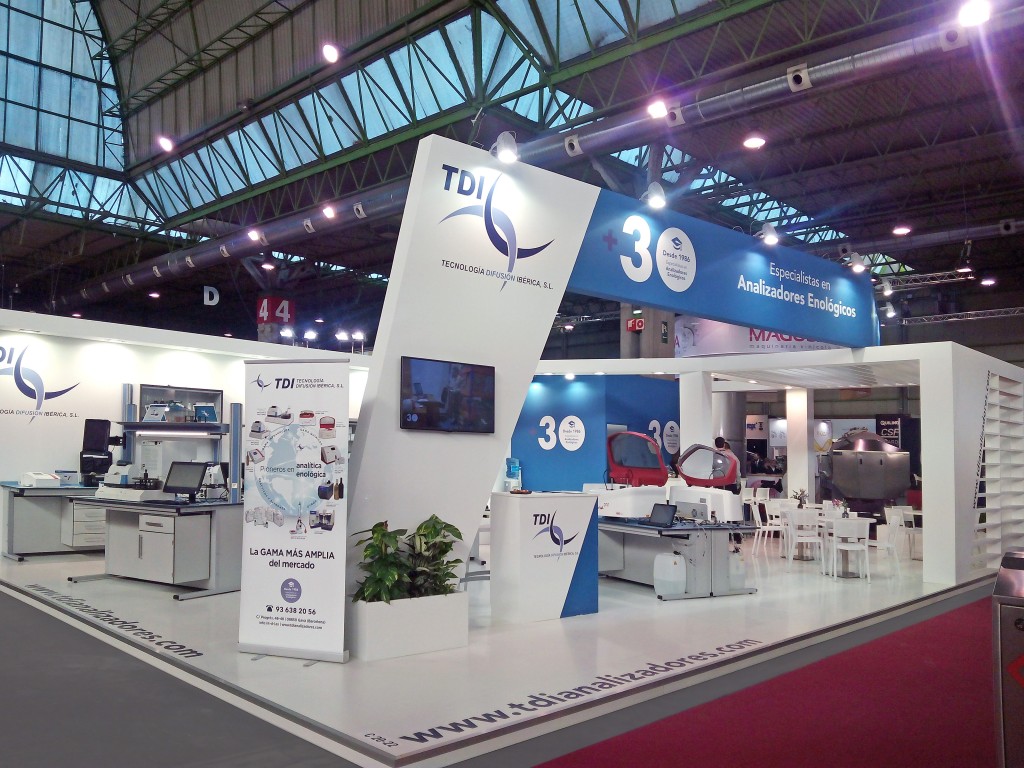
General view of TDI stand at enomaq 2017

Visitors talking with TDI stand responsibles at ENOMAQ 2017

View of the TDI stand at Enomaq 2017

Visitors talking with TDI stand responsibles at ENOMAQ 2017